Automate review responses with rules and templates
Conditions and reusable templates helped teams organize consistent first-response workflows for recurring review scenarios.
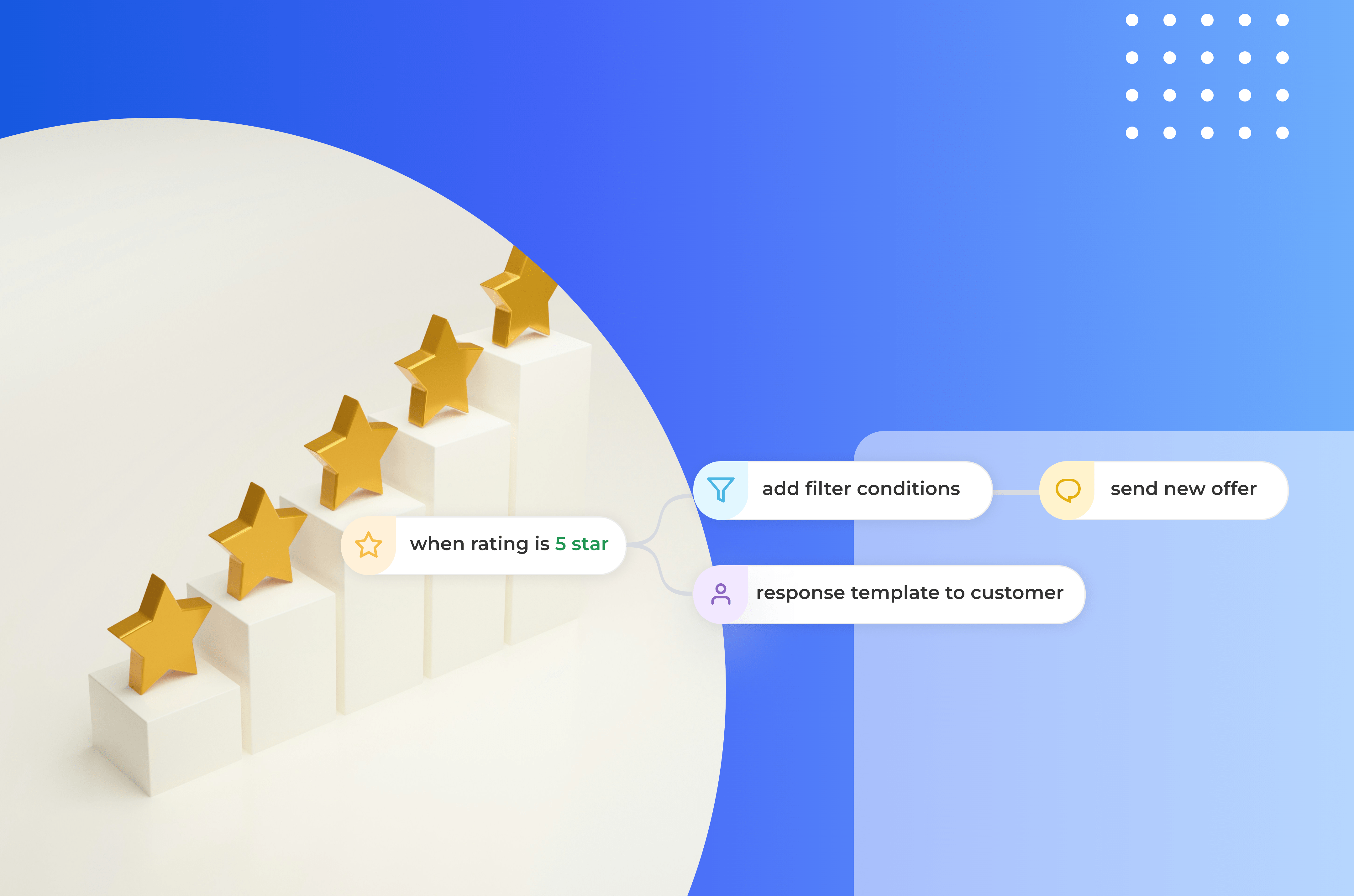
By early 2024, Synup's established review-response workflows had developed into structured recipes built from rating or review-text criteria and reusable response templates. In the supporting legacy Smart Automations context, teams could separate supported positive-review scenarios from feedback that needed different handling. The workflow was based on rules and templates, with publisher behavior varying by supported destination.
Turn customer lists into review-request campaigns
Structured campaign workflows helped businesses turn customer contacts into a repeatable process for requesting feedback.
During this period, Synup's established Review Acquisition experience had developed into structured campaign building from manually added contacts, customer lists or files, and supported connected systems. Supported outreach and review-page workflows provided a repeatable path for asking recent customers for feedback without relying only on organic reviews.

Schedule seasonal campaigns across business profiles
Goal, location, and scheduling controls helped marketers coordinate time-bound profile campaigns across supported business locations.
By early 2024, Synup's established profile-campaign workflows had developed into a more structured builder for choosing a campaign goal, selecting locations, setting a schedule, and coordinating supported seasonal, holiday, or event-oriented profile actions. This later workflow expanded on the earlier campaign foundation without implying that the richer showcase, analytics, or publisher behavior represented in subsequent periods was already present in the same form.

Repeatable local work, with clearer structure
By early 2024, these review and campaign workflows were giving multi-location teams a more structured way to handle recurring customer outreach and seasonal profile activity. Later Synup experiences expanded these foundations, while the historical material here documents how the workflows were publicly represented during this period.