Monitor and respond to reviews across locations and sources
Centralized monitoring, filters, alerts, and reply workflows helped teams manage customer feedback across supported locations and review sources.
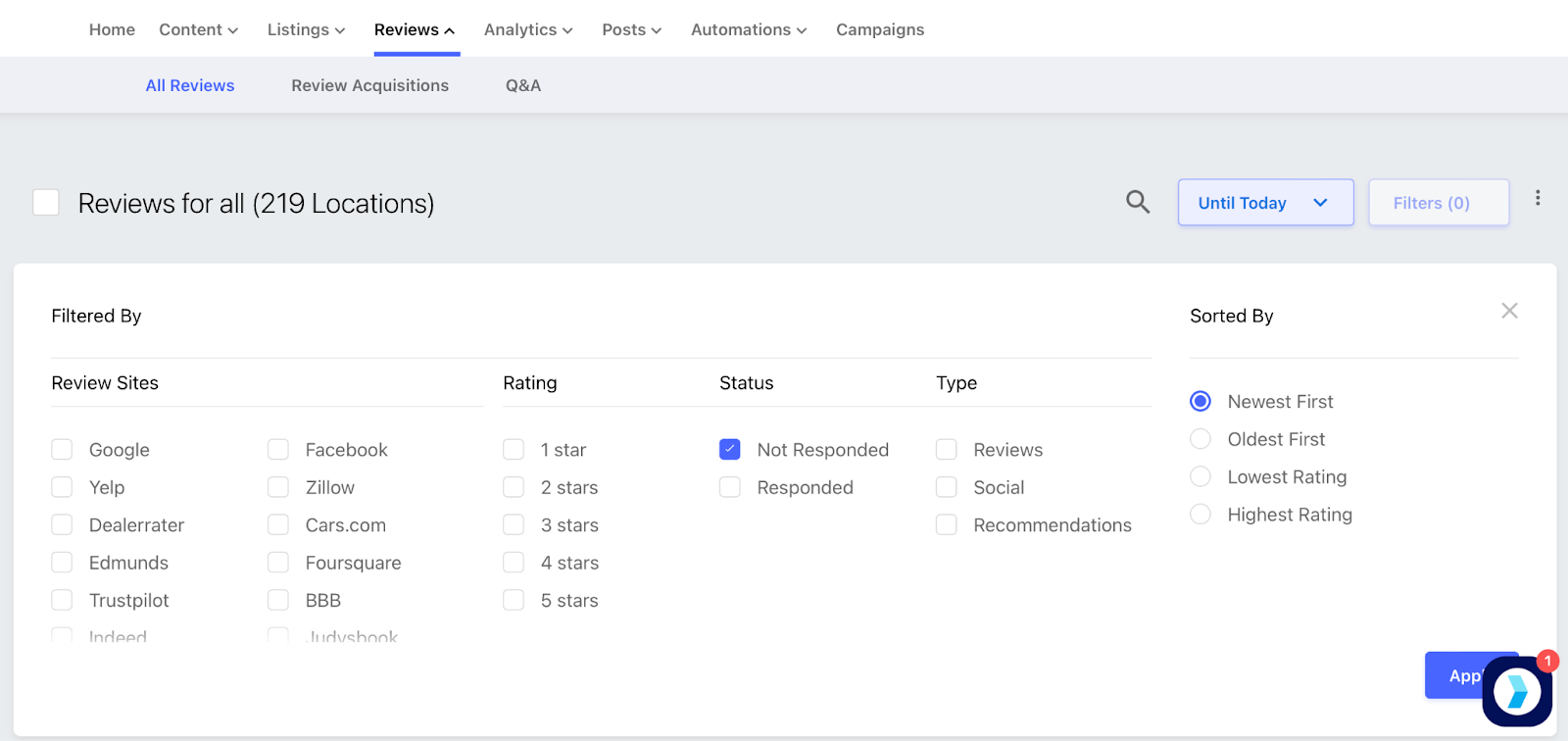
By mid-2023, Synup's established review-management foundation had developed into a more operational cross-source experience, including documented Google and Yelp workflows. Teams could filter feedback by source, rating, response status, and content type, receive alerts, review basic performance context, and respond without checking each publisher account separately. This historical workflow should not be read as the later multilingual, bulk-response, or approval experience.
Plan and measure social content from one workspace
Calendar-based planning and performance context helped teams organize upcoming social content from a shared workspace.
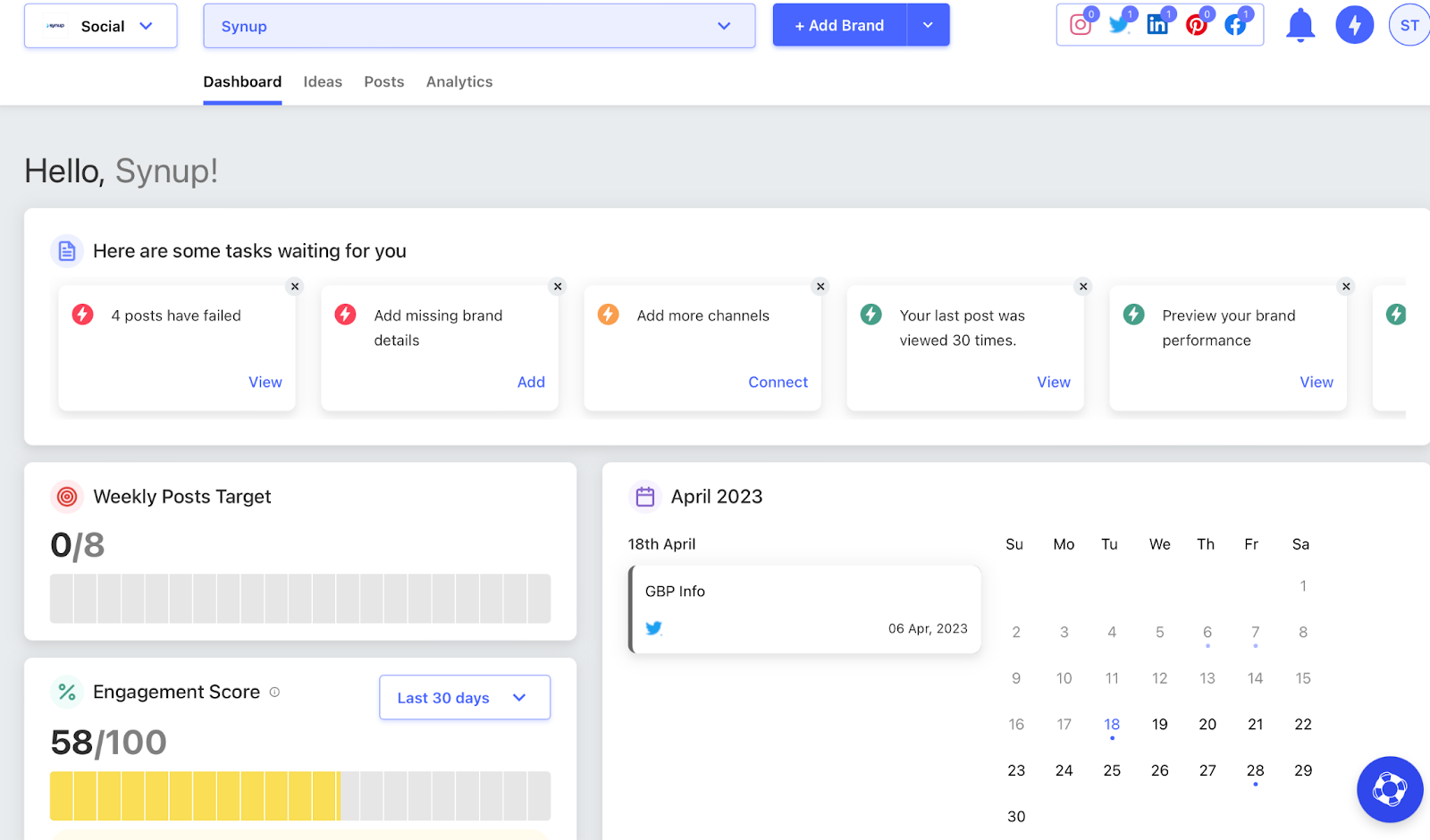
By this point, Synup Social represented a dashboard for planning content, viewing scheduled posts, checking connected-channel status, and following documented engagement and post-performance signals. Teams could use a calendar to organize their publishing cadence and reuse content across supported social workflows. Network coverage and today's planning experience have evolved since this interface was represented.
Create, remix, and refine social posts with AI assistance
Assisted drafting controls helped teams generate and reshape social copy while keeping editing and publishing decisions with the user.
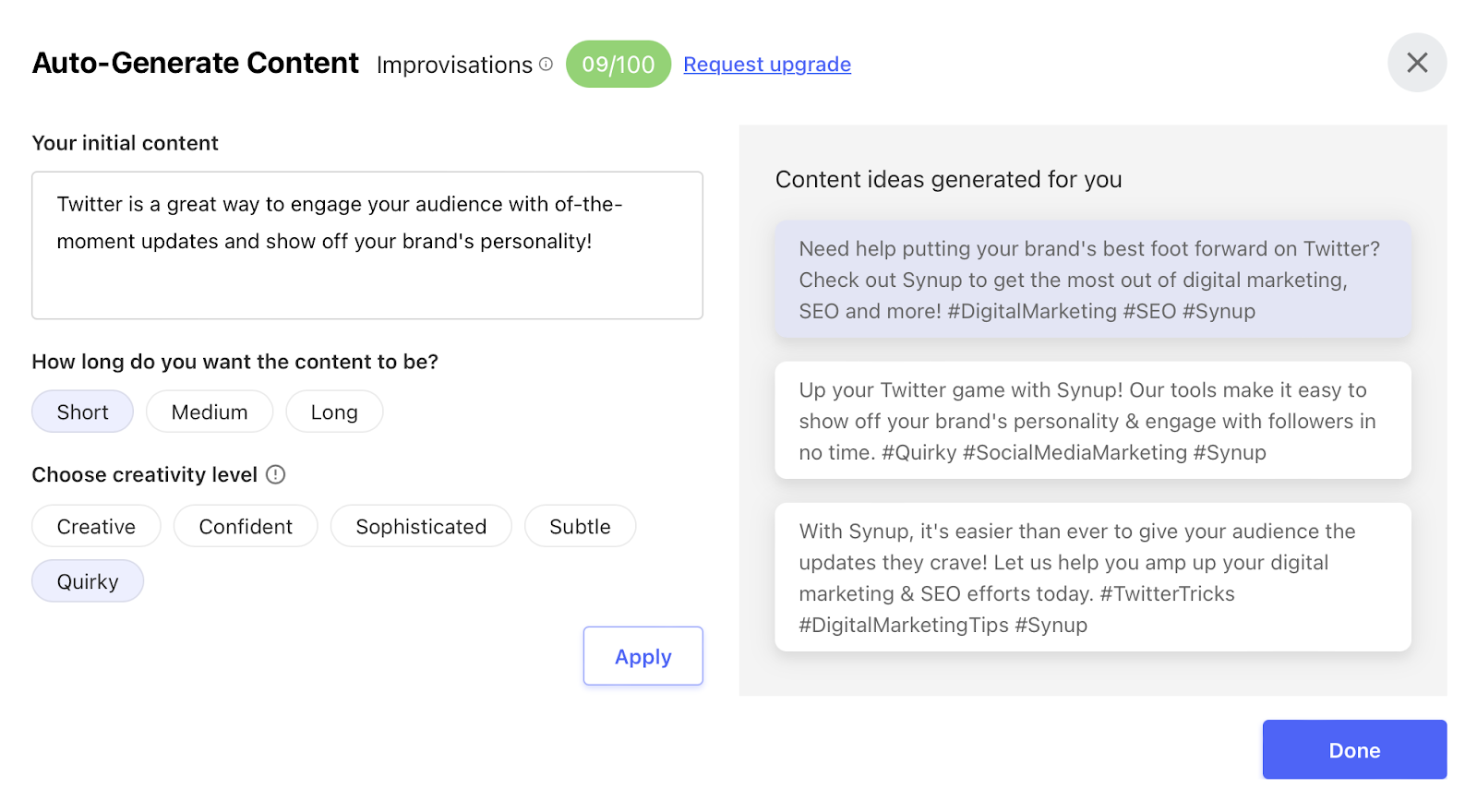
Synup's public Social experience by mid-2023 included assisted drafting for social copy, with controls for content length and tone alongside multiple editable suggestions. Documented workflows also covered regenerating or remixing content before a user chose whether to edit, schedule, or publish it. This was an early assisted-content workflow, not a general-purpose agent or an autonomous publishing system.
Manage local citations and listing presence from one platform
A shared Listings workspace helped teams manage publisher connections, consistency issues, duplicates, and location presence without visiting every directory.
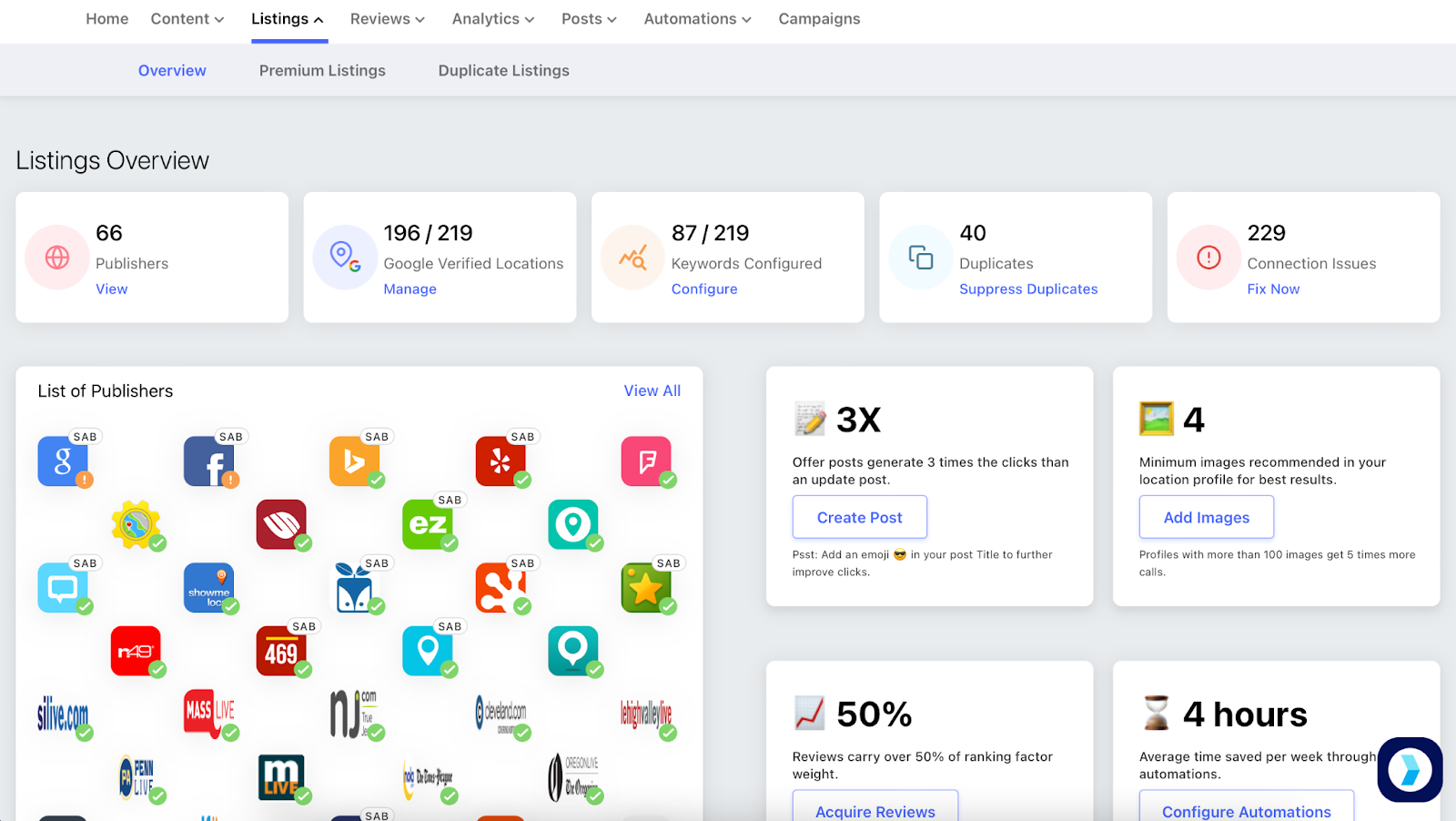
By mid-2023, Synup's established Presence experience had expanded into a more operational view of business listings, publisher connections, verification status, duplicate profiles, and connection issues. Supporting workflows covered maintaining core business information and coordinating changes across supported locations and directories. The precise publisher coverage and operating model have changed, so this historical view is not a promise of present-day parity.
Connected workflows for local marketing
By mid-2023, these review, social, assisted-content, and listing workflows were bringing more day-to-day local marketing work into one platform. The interfaces and operating details have evolved, while the historical material here documents how those capabilities were publicly represented by this point.