Plan posts and manage client work
Manage posting times with Smart Scheduling, reuse images with Media Library, and organize directory coverage with Publisher Sets. This week also brings simpler workspace access and more context for client reporting.
The latest meaningful features, launches, and workflow improvements from across Synup.
Manage posting times with Smart Scheduling, reuse images with Media Library, and organize directory coverage with Publisher Sets. This week also brings simpler workspace access and more context for client reporting.
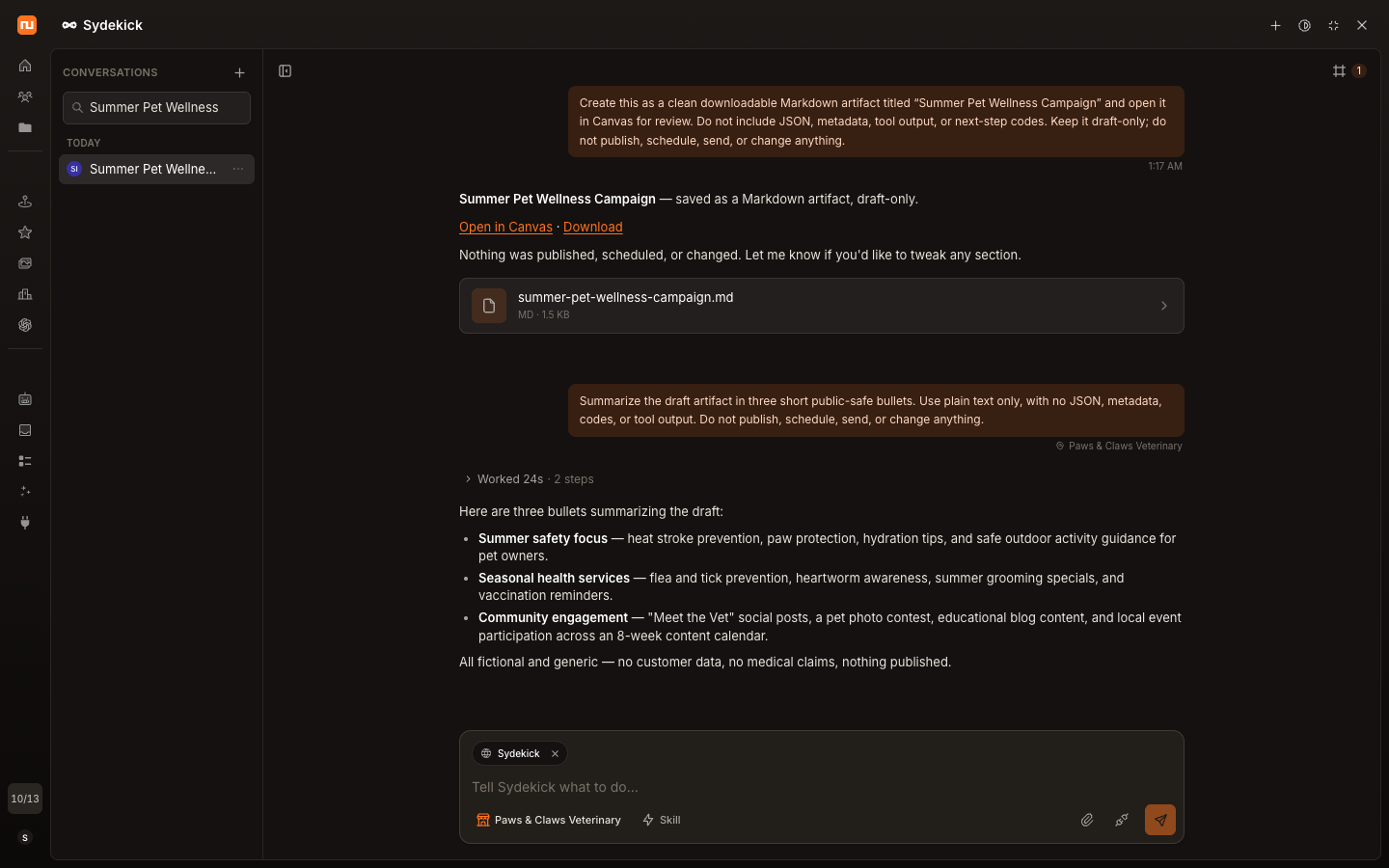
A campaign rarely lives in one place. The brief is in a conversation, the posts are in a schedule, and customer reactions are scattered across inboxes and review sites. This week’s updates help your team keep that work connected—from planning a campaign with Sydekick to preparing content, checking the wording and following what customers are saying.
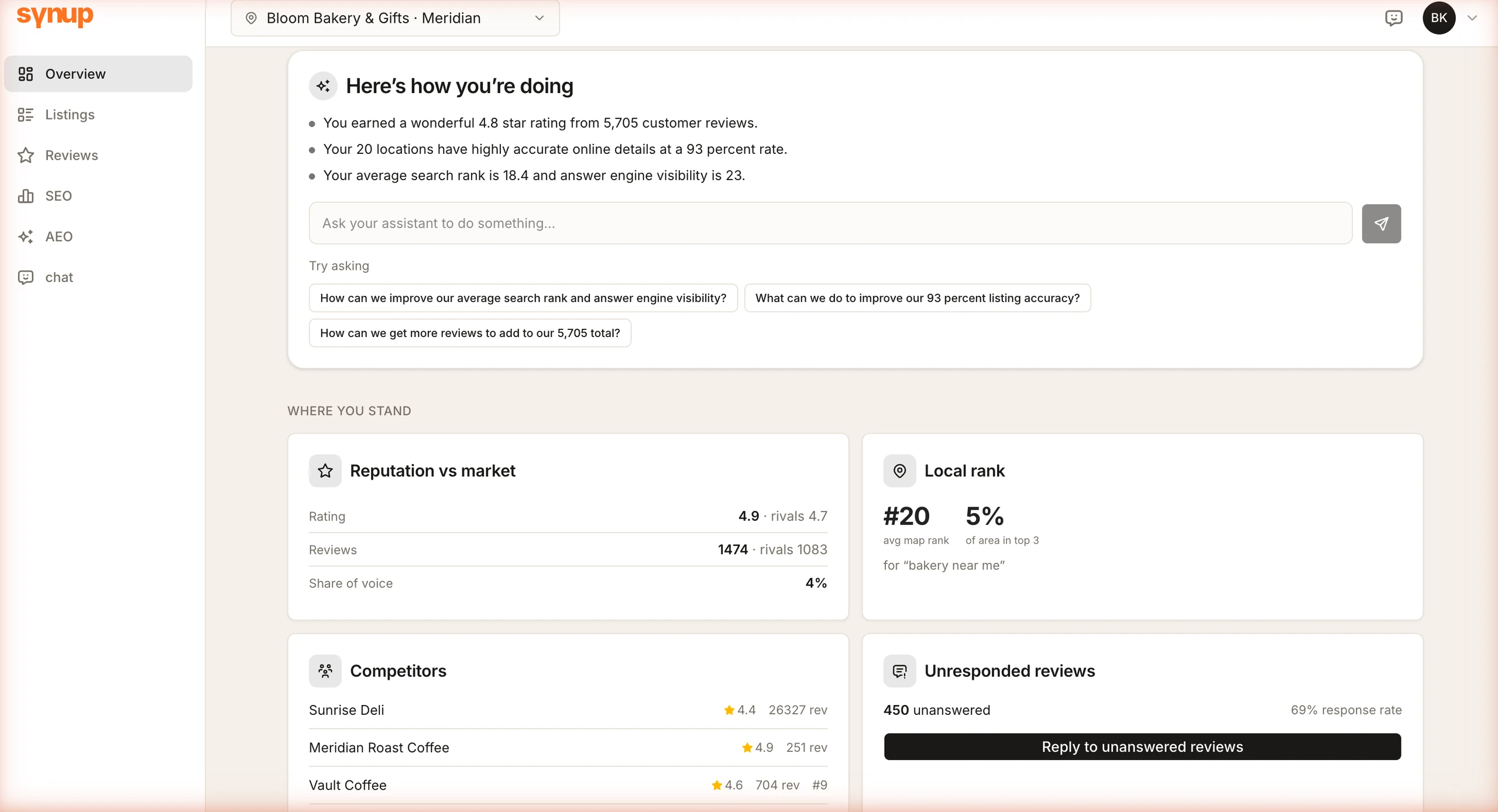
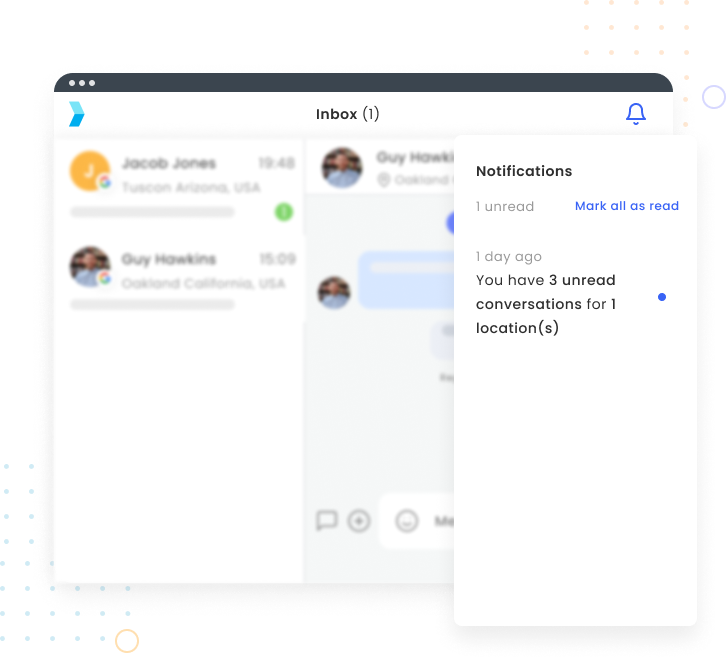
Your customers message you across platforms. Now you can reply from one place. This week, we’re introducing Social Inbox, adding more control over teammate access, and making everyday client work easier to plan, review and organize.
Keep client work moving with more flexibility over how you delegate, review, and plan. This week, Sydekick tasks can run while you work elsewhere in Synup, Autonomy lets you decide which actions need approval, and Social brings content ideas alongside your calendar. Smaller improvements make everyday work clearer, from tracking credits to importing locations.
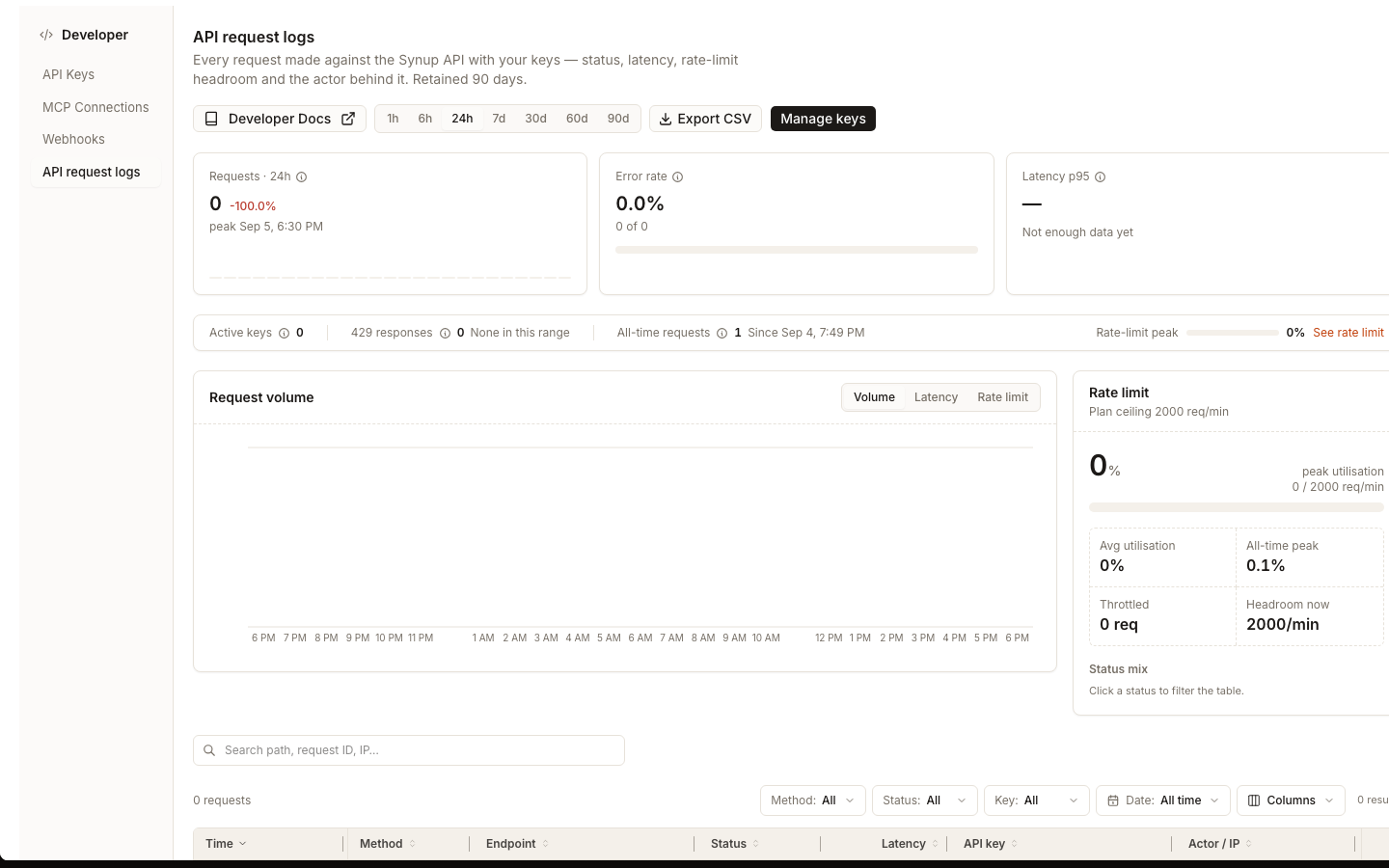
Give your clients a marketing agent under your agency’s brand, inside a reimagined client portal. This week also brings background Google location imports and updates to reporting, billing, account settings, webhooks, and API keys.

September adds reversible client archival, a new Developers workspace, centralized SMS sender management, and Profile Analytics PDF exports—plus smoother campaigns, connections, navigation, Social publishing, Reviews, and AEO reporting.

August brings Sydekick, Synup's new AI teammate for working across clients and locations, reviewing generated work, returning to ongoing conversations, and automating repeatable workflows.

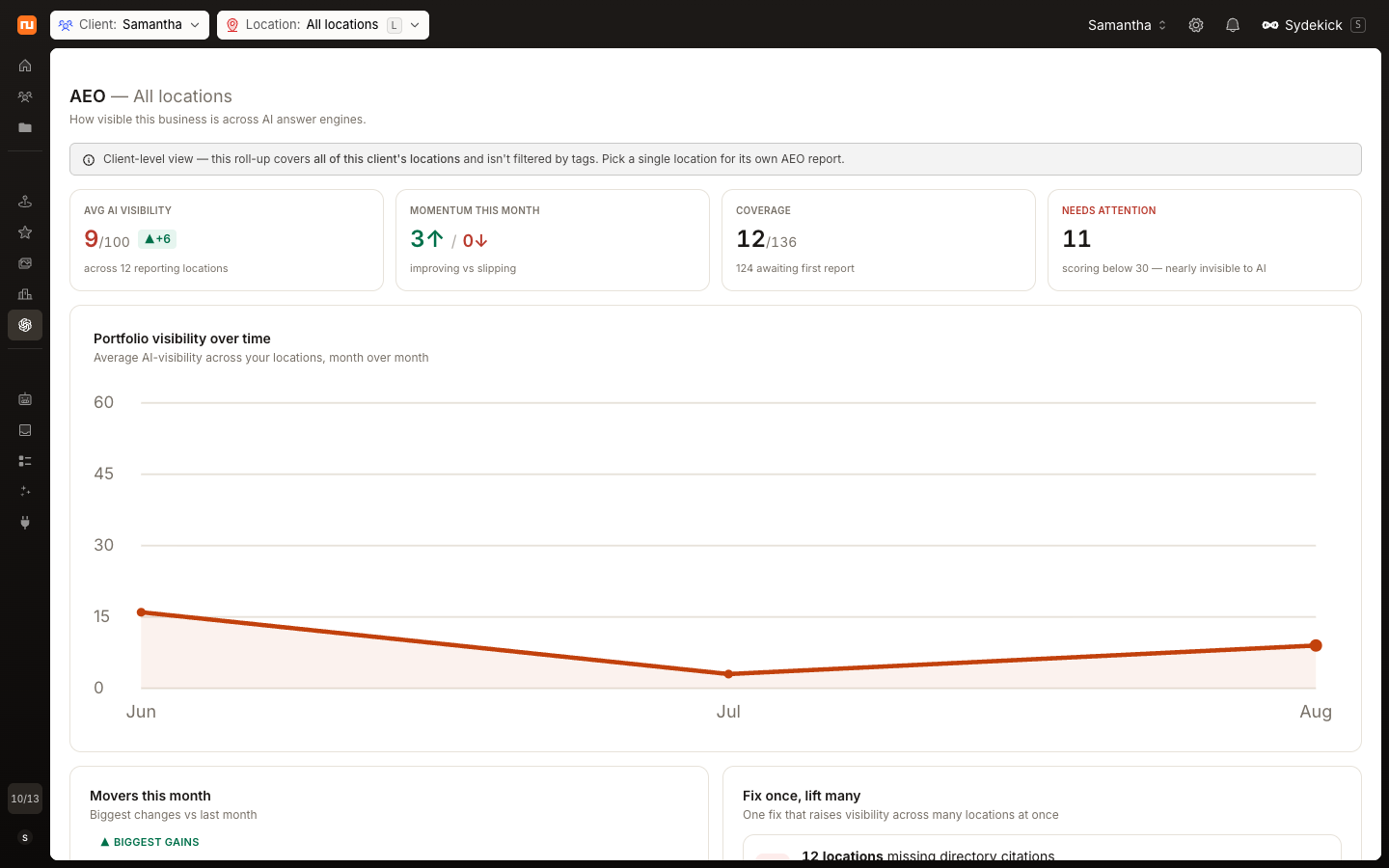
July brought clearer portfolio reporting, faster location management, more efficient review workflows, and flexible special hours for teams managing many locations.

June made Synup more operational for agencies and multi-location teams, with richer profile management, broader social publishing, and easier workspace switching.

May focused on helping agencies operate at scale, with a clearer client portfolio, faster ways to bring existing accounts into Synup, and broader control over agency branding.

During Q1 2026, Synup began building durable onboarding, client, and account foundations that later supported the expanded Agency OS experience. This is a development retrospective, not a public launch announcement.
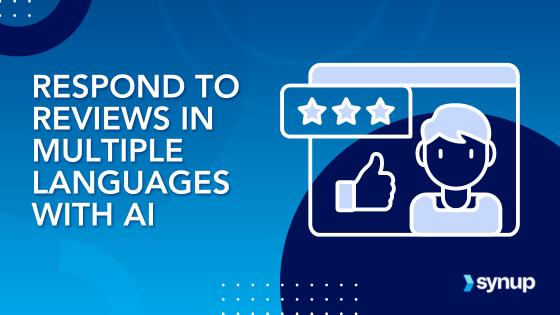
By Q4 2025, Synup publicly represented a multilingual review-response workflow that drafted an editable reply in the reviewer's language and kept the response within a human-controlled process.

By the third quarter of 2025, Synup's public product experience was emphasizing richer profile campaigns, structured content operations across locations, and partner-ready local marketing capabilities. This retrospective covers three capabilities documented during the period without assigning an exact launch date to each one.

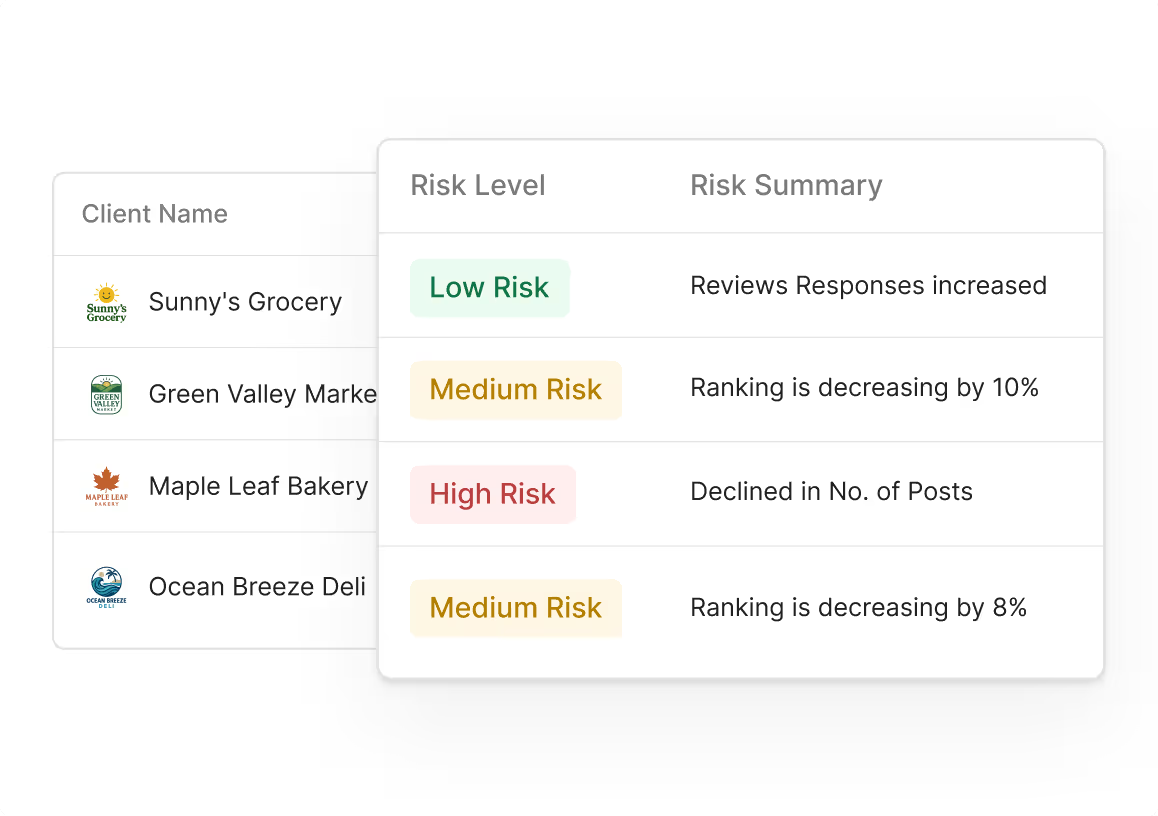
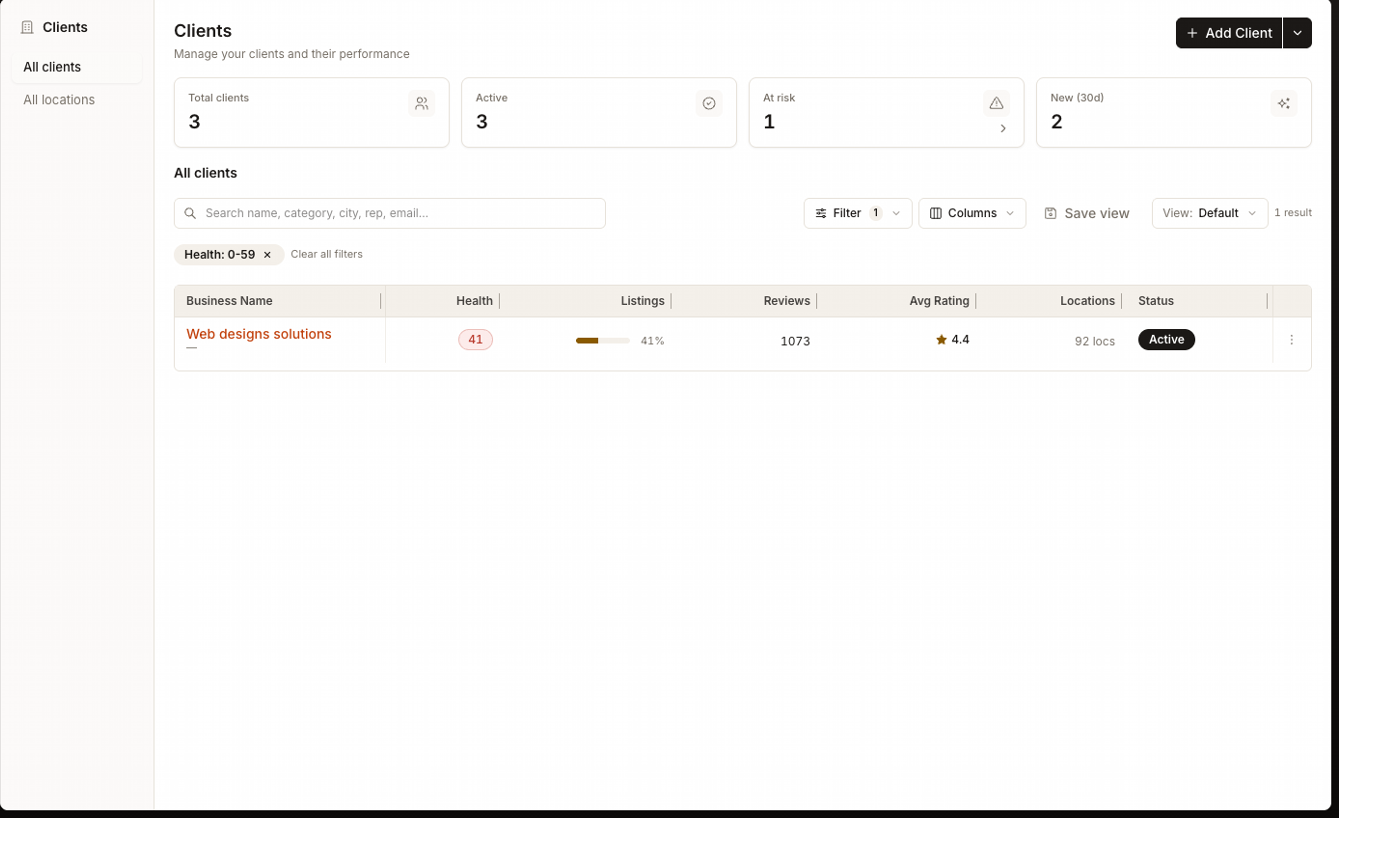
By mid-2025, Synup's public product experience was increasingly centered on helping agencies understand client health, give clients controlled access, and present that work under their own brand. This retrospective revisits four of those capabilities through preserved historical product material and the Synup interface available today.


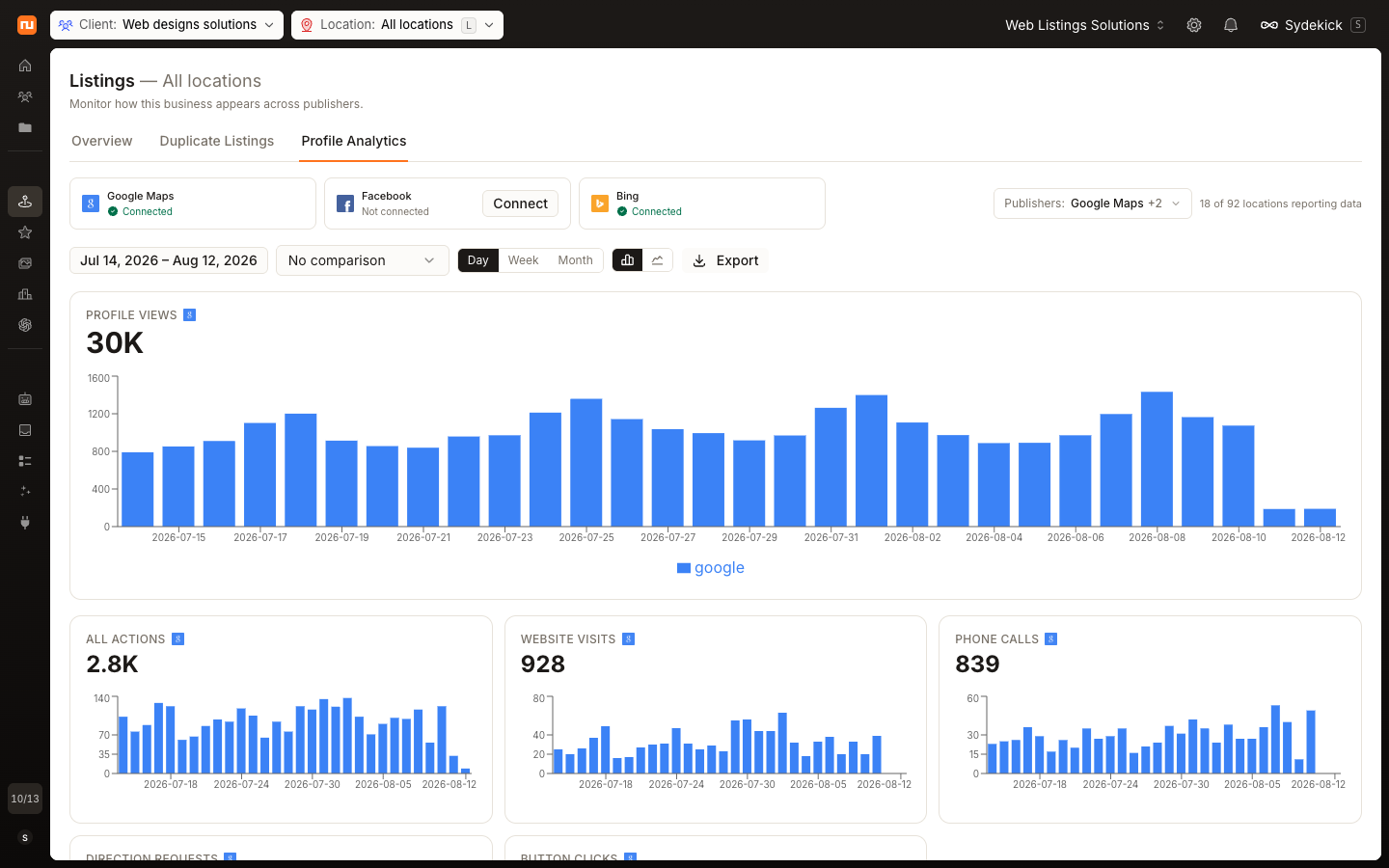
By early 2025, Synup already supported a broad set of workflows for multi-location businesses and agencies, spanning listings, profile performance, reviews, social planning, and local search visibility. This retrospective revisits five of those capabilities through preserved historical interfaces and the Synup experience available today.


By September 2024, Synup publicly represented AI-assisted drafting for Google review responses. This retrospective records that period-level capability without assigning it an exact launch date.
By mid-2024, Synup's public product experience already connected accurate business listings with voice discovery and local performance measurement. This retrospective documents two capabilities publicly represented by the period without assigning an exact launch date to either one.

By early 2024, Synup was helping multi-location teams turn review outreach, response rules, and profile campaigns into repeatable workflows. This retrospective documents three capabilities publicly represented during the period without assigning an exact launch date to each one.

By mid-2023, Synup's public product experience already brought review management, social planning, assisted content creation, and local listing presence into a connected set of workflows. This retrospective documents four capabilities publicly represented by the period without assigning an exact launch date to each one.

On December 8, 2022, Synup introduced Synup Home, a historical landing page that brought headline KPIs and prioritized Critical and Important work into one operational starting point.
By Q3 2022, Synup's public product experience brought together customer messaging, business presence, profile campaigns, and configurable workflow automation. This retrospective documents four established capabilities represented by the period without presenting them as new launches in 2022.

On June 21, 2022, Synup announced a Campaigns expansion that used census and demographic insights to help brands make more informed choices about which locations received campaign content.
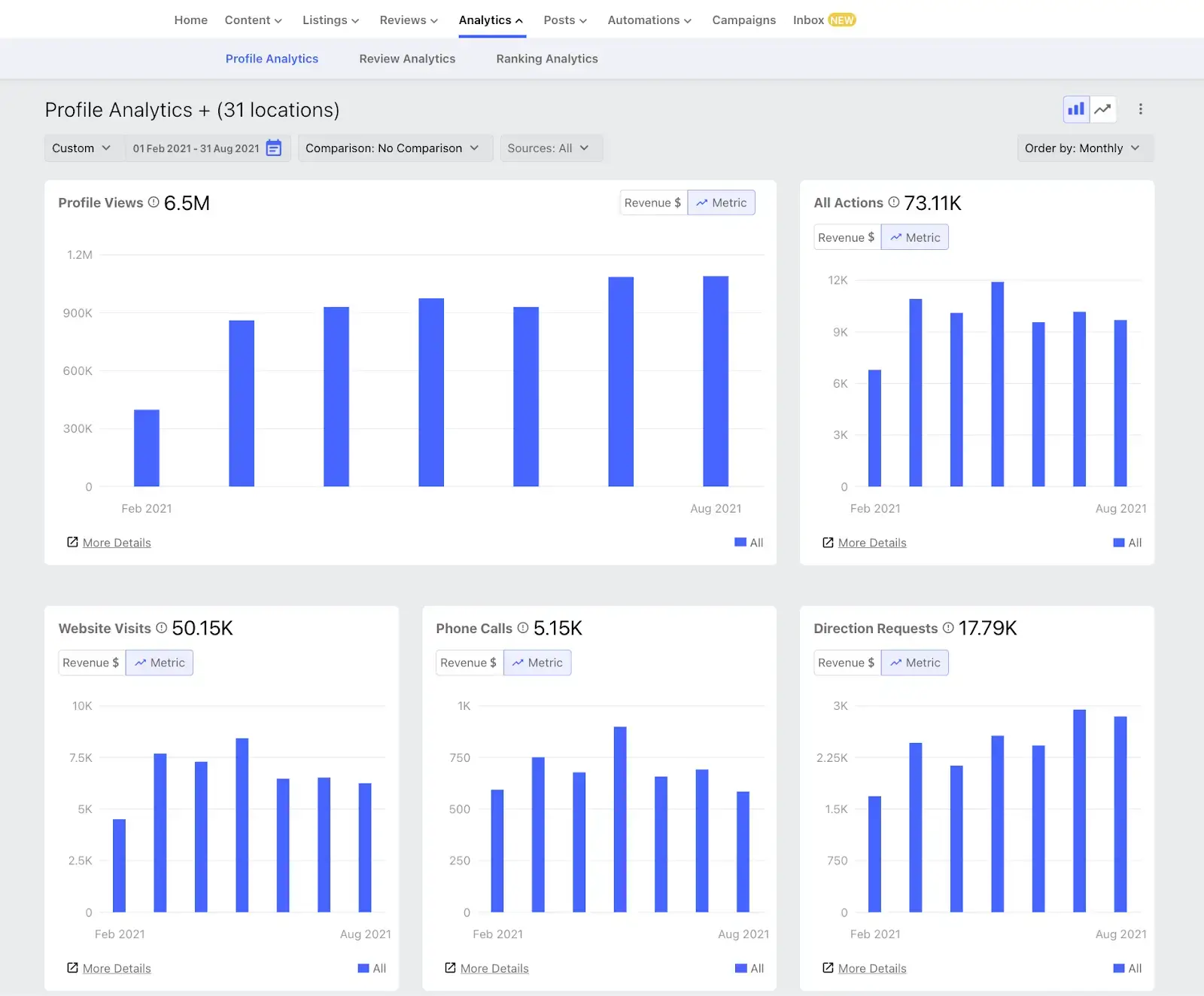
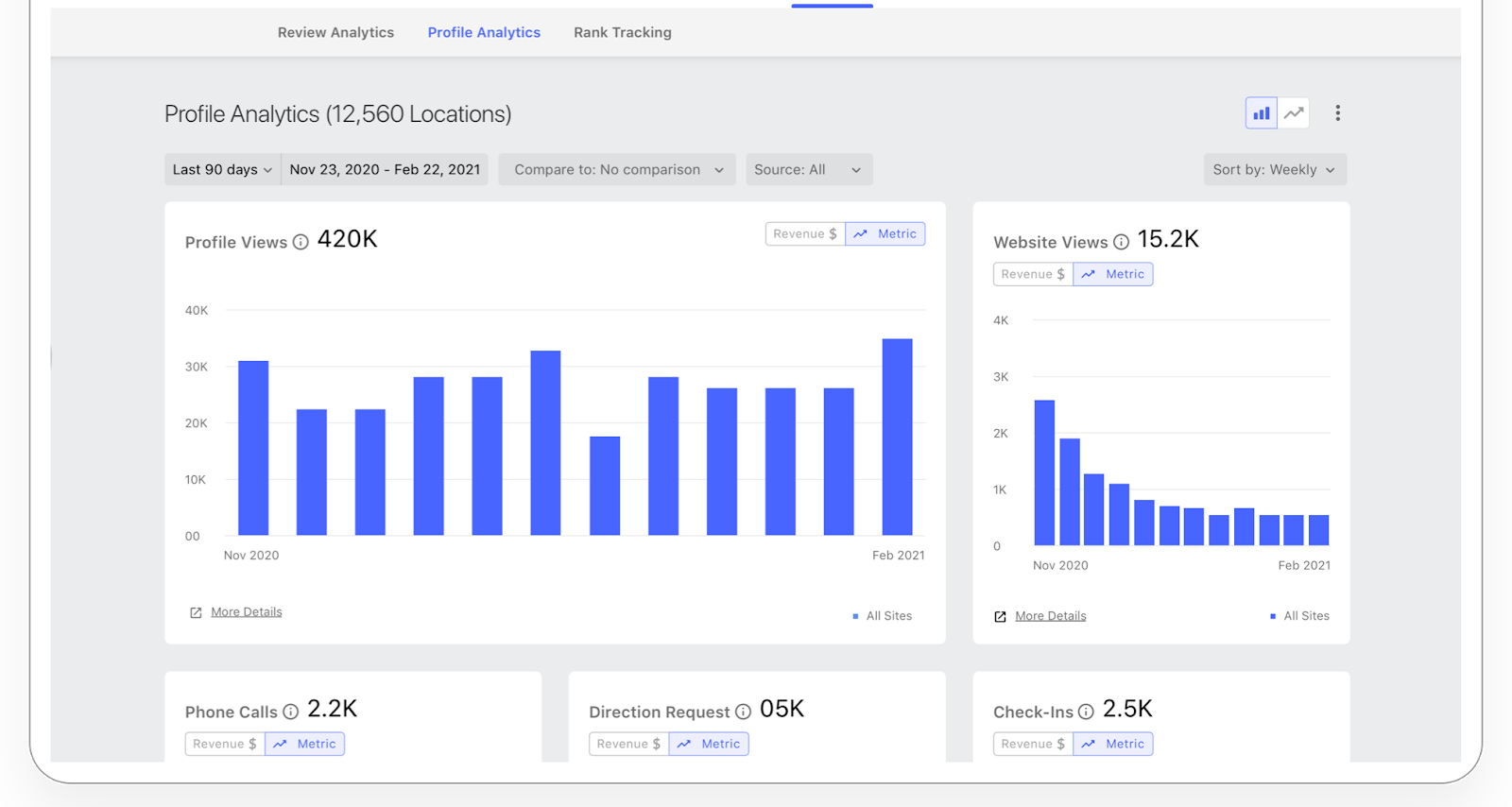
In Q3 2021, Synup announced a major Profile Analytics redesign and introduced a configurable Automations module. During the same period, Synup's public product experience also showed how brands could turn digital profiles into campaign surfaces. This retrospective uses exact launch dates only for the two dated July announcements.

By the third quarter of 2020, Synup's established presence, content, reputation, and insights foundation had expanded through three distinct operational workflows: an actionable Feed, structured Menu Management, and dedicated voice-discovery tools. This retrospective documents those capabilities without assigning a launch date to each one.

On October 30, 2019, Synup publicly introduced the Intent Marketing Cloud, bringing established presence, reputation, and analytics capabilities together with a broader content experience in one multi-location platform. This retrospective describes four capability families Synup presented with that platform without treating the announcement date as the first deployment date for every underlying feature.

By early 2019, Synup's public product experience already supported multi-location management, listing synchronization, reporting, reputation workflows, and embeddable widgets. This retrospective documents five capabilities publicly offered by the period without assigning a Q1 launch date to each workflow.
On November 6, 2018, Synup introduced the all-new Review Pack, a substantial redesign and expansion of established reputation workflows for measuring review performance and handling day-to-day interactions across locations.
In September 2018, Synup publicly introduced location Tags, rollup ranking and profile analytics, and a free Voice Readiness Test. This retrospective stays focused on those three verified workflows rather than assigning their dates to later product capabilities.
No updates match these filters.